
Writing and Content Basics
What Is Blog Writing? Meaning, Purpose and Examples
Understand what blog writing means, why people publish blog posts, the main types of blog content and the basics of writing an article that readers can use.
Beginner-friendly guide · Examples included · Practical writing steps
Start with the reader
A useful blog post answers a question, explains an idea or helps someone take a practical next step.
Blog writing is the process of creating articles for publication on a blog or website. A blog post can explain a subject, share an experience, answer a common question or offer advice on a particular topic. The aim is to communicate information in a format that readers can find, follow and understand.
Blog writing is used by individuals, businesses, organisations and publishers. The style can range from personal and conversational to technical and professional, depending on the subject and the people the article is intended to reach.
What Is Blog Writing?
Blog writing means preparing written content for a blog, usually as an individual article or post focused on a specific topic. Posts are often displayed in reverse chronological order on a blog, although many websites also organise articles into categories and evergreen resource pages.
A blog post may be short and straightforward or detailed and research-based. For example, it could explain how to fix a common website problem, compare two products, summarise an industry development or share lessons learned from a personal experience.
Simple example
Topic: How to Make a Website Load Faster
What the blog post does: Explains why page speed matters, identifies common causes of slow loading and gives readers practical steps they can try.
In other words, blog writing is not defined by one particular tone or length. What matters is that the content has a clear subject and gives its intended readers something worthwhile.
What Is the Purpose of Blog Writing?
The purpose depends on the person or organisation publishing the article. Some blogs are mainly for sharing ideas, while others help readers solve problems or learn about a service.
- To inform: Explain a topic, event, process or new development.
- To teach: Break a task into steps or help readers develop a skill.
- To share experience: Describe a personal project, opinion or lesson learned.
- To answer questions: Provide clear information about a subject people are searching for.
- To build an audience: Publish useful content that gives readers a reason to return.
- To support a business: Explain customer problems, demonstrate expertise and help potential customers make informed decisions.
A single article can serve more than one purpose. A practical guide on choosing a website platform, for instance, can educate readers while helping a web design business demonstrate its knowledge.
What Are the Different Types of Blog Writing?
Blog posts come in several common formats. The best choice depends on the subject, the reader’s question and the information you want to communicate.
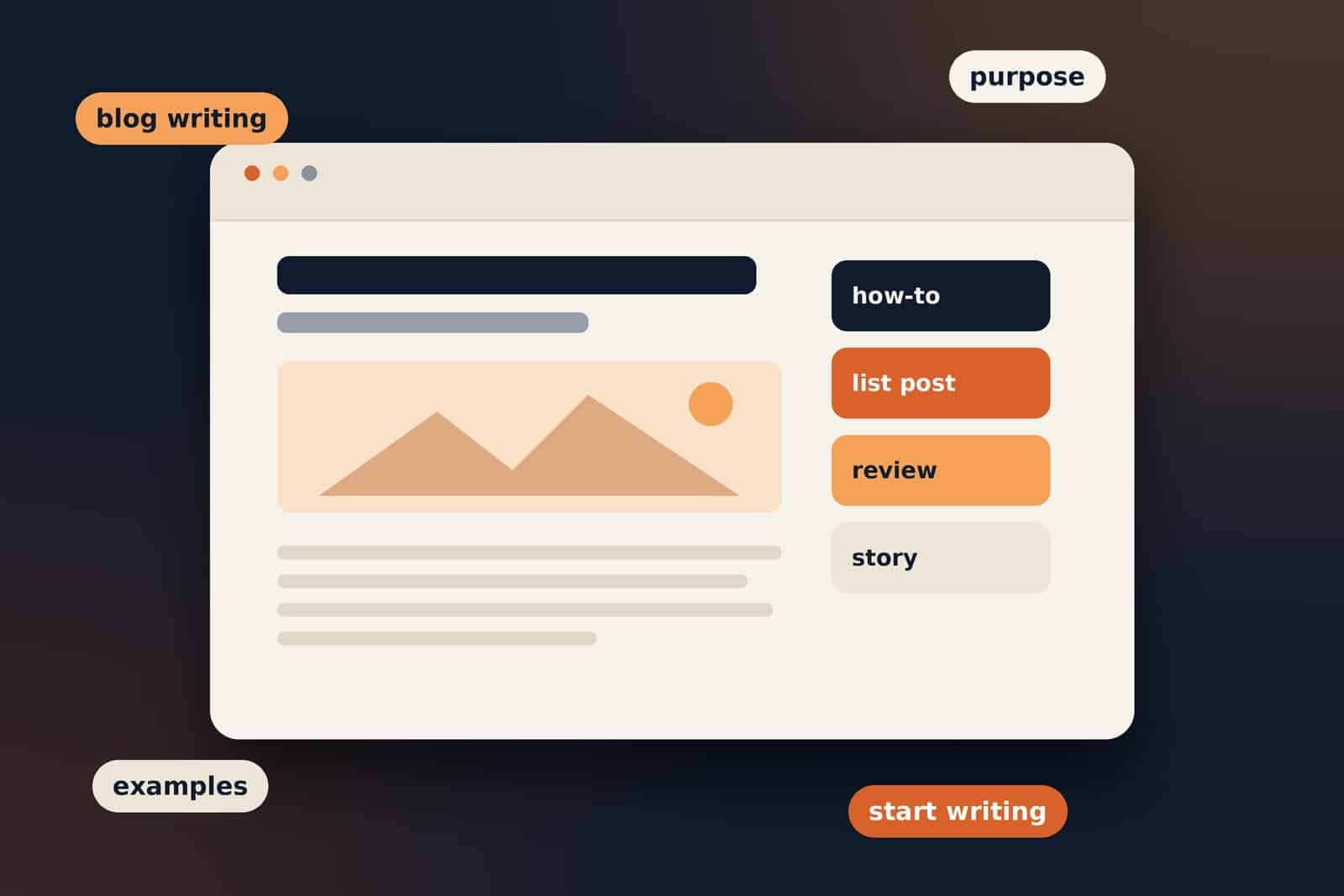
- How-to guidesExplain how to complete a task in a sequence of manageable steps.
- Informational articlesDefine a term or explain a topic, concept or process.
- List postsOrganise related ideas, recommendations or tips into a scannable list.
- Reviews and comparisonsDescribe features, differences, benefits and limitations to help readers assess options.
- Opinion and commentaryPresent a viewpoint supported by reasoning, examples or relevant evidence.
- News and updatesCover recent developments, announcements or changes in a particular field.
- Case studiesExplain a real project or situation, including the approach taken and the outcome where known.
- Personal storiesShare experiences, reflections or lessons from everyday life and work.
These formats can overlap. A guide might include a comparison table, while a personal story might also offer advice. Choose the structure that makes the information easiest to understand.
What Makes Blog Writing Different from Other Types of Writing?
Blog writing shares techniques with journalism, technical writing, copywriting and academic writing, but it often combines accessible explanations with a structure that is easy to scan online.
- It is usually organised around a focused topic or question. Readers should be able to tell what the article covers from its title and introduction.
- It is designed for online reading. Descriptive headings, short-to-moderate paragraphs, lists and relevant links can help readers navigate the page.
- It can use a flexible tone. A personal blog may sound informal, while a professional guide may need a more measured style.
- It may be optimised for search. Authors can use clear titles and relevant wording to help people discover the content, without sacrificing usefulness or natural language.
Not every blog post needs to be casual, brief or written for search engines. The format should suit the topic and the reader rather than follow a fixed formula.
What Are the Main Elements of a Blog Post?
Many blog posts use a familiar structure. The exact arrangement can vary, but these elements help readers understand the topic and move through the article.
Title or headline
The title tells readers what the post is about. It should be specific and reflect what the article actually covers.
Introduction
The introduction establishes the subject, explains why it matters and sets expectations for what follows. It should reach the point without unnecessary background.
Main body
The body develops the topic through sections, explanations, examples, evidence or practical steps. Headings help divide the article into logical parts.
Conclusion or next step
The ending can summarise the key idea, offer a useful next step or direct readers to a relevant resource. Some articles can finish naturally once the question has been answered.
Links and supporting material
Relevant internal links can guide readers to related articles on the same site. External links can point to reliable references, original research or official guidance where needed.
How Do You Write a Good Blog Post?
You do not need a complicated process to get started. Work through these steps, then adapt them to the subject and purpose of the article.
- Choose a focused topic.
Decide what you want to explain and who the article is for. A specific topic is easier to plan than a broad subject. - Understand the reader’s question.
Think about what the reader already knows, what they need to learn and what a useful answer should include. - Plan the structure.
List the main points in a logical order. Use headings to organise the article before drafting the full text. - Write a direct introduction.
Introduce the subject and explain what the post will help the reader understand or do. - Explain the main points clearly.
Use simple, accurate language. Add examples when they make an unfamiliar idea easier to grasp. - Review facts and sources.
Check claims, dates, figures and links. Distinguish verified facts from opinion or personal experience. - Edit before publishing.
Remove repetition, improve unclear sentences and check headings, spelling, links and mobile readability.
For more practical advice, read Blog Writing Rules: How to Write Clear, Useful and Engaging Blog Posts.
What Is an Example of Blog Writing?
Imagine a blog about web design publishing an article called How to Choose a Website Colour Scheme. The article might explain how colour affects the appearance of a website, describe how to select a small group of complementary colours and show examples of palettes used for different types of sites.
Example opening paragraph
Choosing colours for a website can feel difficult when there are so many options. A simple starting point is to select one main colour, choose a supporting colour and use a neutral shade for backgrounds. This gives the design a consistent base before you refine the details.
This is an example of blog writing because it focuses on one topic, introduces a practical problem and begins to offer information the reader can use. The rest of the post could expand on the process with examples, accessibility considerations and common mistakes to avoid.
Other examples include a travel blog describing a local walking route, a technology blog explaining a software feature or a personal blog reflecting on a new hobby. The subject changes, but the goal is still to communicate something clearly to an intended audience.
Frequently Asked Questions
Blog writing is creating articles for a blog or website to share information, explain a topic, answer questions or offer advice to readers.
Its purpose can be to inform, teach, share experience, answer questions, build an audience or support a business. The main aim varies depending on the author and audience.
Examples include how-to guides, product comparisons, informational articles, personal stories, reviews, opinion pieces, case studies and news updates.
Useful skills include researching a topic, organising ideas, writing clearly, checking facts, understanding the audience and editing a draft. Search optimisation can also be helpful for articles intended to attract organic traffic.
No. The appropriate length depends on the subject and what readers need. Cover the topic well, but avoid adding repetition just to increase the word count.
In short
Blog writing is about sharing information or ideas through articles published online. A useful post has a clear purpose, a focused topic and a structure that helps readers follow the information. The strongest approach is to write for the people you want to help, then edit carefully before publishing.
Keep improving your blog writing
Explore these practical blog writing rules to learn more about planning, structuring and editing clear articles.
Tagged in
Written by
Keshera Wijeyesekera
I write Interesting to Read, a blog on all kinds of topics worth your time. Outside of the blog, I work in SEO and digital marketing.
Leave a Reply