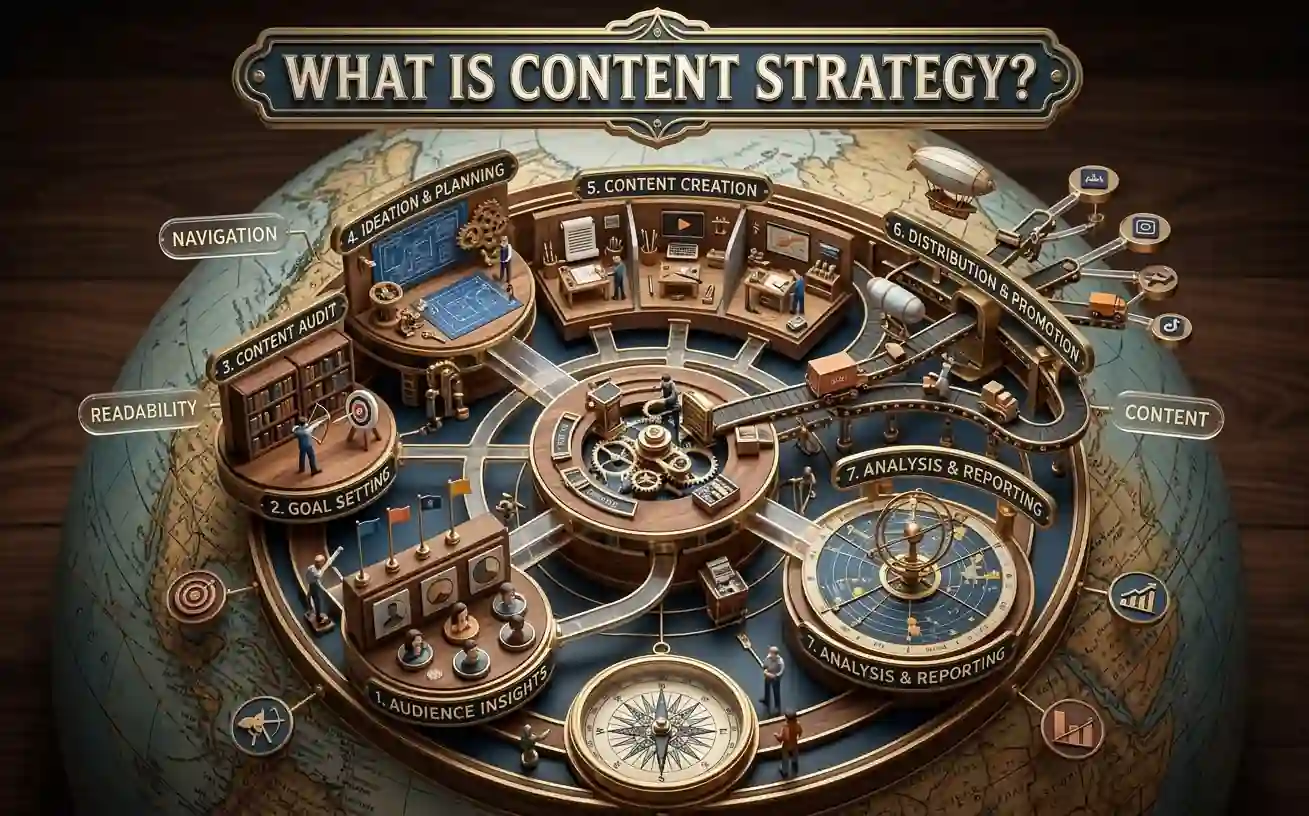
What Is Content Strategy? A Simple Guide to Planning Content

Content Marketing · Planning

What Is Content Strategy?

A simple guide to planning content with purpose, reaching the right audience, and keeping your marketing activities connected.

Practical guide  ·  8–10 min read

Start with purpose

A content strategy connects what you publish to the goals and the audience it needs to serve, so every piece of content has a reason to exist.

Content is an important part of almost every digital marketing activity. Websites, search engine optimisation (SEO), social media, email campaigns and paid advertising all rely on content in some form. However, creating content for each channel without an overall plan can lead to inconsistent messages, duplicated effort and missed opportunities.

This is where content strategy becomes important. It provides a clear direction for deciding what content to create, who it is for, where it should be published and what it should achieve. Rather than treating every blog post, social media update or landing page as a separate task, a content strategy connects these activities to wider goals.

What Is Content Strategy?

Content strategy is the process of planning, developing, managing and evaluating content so that it supports specific business and audience needs. It establishes the purpose behind content and provides a framework for making decisions about topics, formats, channels, publishing schedules and performance.

A strategy considers the complete content process, from understanding the audience and identifying useful topics to publishing content, keeping it up to date and measuring its results. It also helps ensure that different pieces of content work together instead of competing for attention or communicating unrelated messages.

In simple terms

Content strategy decides the direction and purpose of your content. It helps answer what you should create, why you should create it, who it is intended for and how it will contribute to your goals.

Why Does Content Strategy Matter?

Publishing content regularly does not automatically mean that your content is effective. Without a clear plan, businesses can spend time producing articles, videos and social media posts that do not address audience needs or support meaningful objectives.

A content strategy helps bring structure to these activities. It makes content decisions more intentional and gives everyone involved a shared understanding of what needs to be produced and why.

  • Creates clear direction: Content activities are guided by defined objectives rather than random ideas or short-term trends.
  • Improves audience relevance: Topics and formats are selected according to the questions, interests and needs of the intended audience.
  • Maintains consistency: Content can follow common standards for tone, messaging, quality and presentation.
  • Connects marketing channels: Website content, SEO, social media and email can support the same broader objectives.
  • Uses resources more effectively: Planning helps reduce duplicated work and makes it easier to prioritise important content.
  • Makes measurement more useful: Clear objectives provide a basis for evaluating whether content is performing as expected.

Key Elements of a Content Strategy

A content strategy can be simple or detailed depending on the size of the organisation and its marketing requirements. However, most strategies consider several important areas.

  • 01 · GoalsBusiness ObjectivesIdentify what the content needs to achieve, such as increasing awareness, attracting relevant visitors, generating enquiries or supporting customers.
  • 02 · PeopleAudience UnderstandingUnderstand the people you want to reach, including their interests, challenges, questions, search behaviour and decision-making needs.
  • 03 · SubjectsTopics and Content ThemesChoose relevant subject areas that connect audience interests with your organisation's expertise, products or services.
  • 04 · FormatContent FormatsDecide whether information is best presented through articles, guides, videos, infographics, podcasts, case studies or other formats.
  • 05 · ReachDistribution ChannelsDetermine where content will be published and promoted, including websites, search engines, social platforms and email.
  • 06 · WorkflowPublishing and ManagementSet responsibilities, workflows, publishing schedules and review processes to keep content organised and up to date.
  • 07 · StandardsGuidelines and StandardsEstablish guidance for tone of voice, writing style, accuracy, visual presentation, accessibility and brand consistency.
  • 08 · ResultsMeasurementChoose suitable performance indicators and review results to understand what is working and where improvements are needed.

How to Create a Content Strategy

Developing a content strategy does not have to involve a complicated process. The following steps provide a practical starting point for businesses, websites and marketing teams.

  1. Define Your Objectives
    Start by identifying what you want your content to accomplish. Your objectives might include building brand awareness, increasing organic traffic, generating leads, explaining a service or helping existing customers. Clear objectives make it easier to decide which content deserves priority.
  2. Understand Your Audience
    Research the people you want to reach. Consider what they are looking for, the problems they want to solve, the questions they ask and the information they need at different stages of their journey. Audience research can include customer feedback, website data, keyword research and conversations with sales or support teams.
  3. Review Your Existing Content
    If you already have a website or active marketing channels, assess the content you have published. Identify useful pages, outdated information, content gaps, overlapping topics and pieces that could be improved or repurposed. This review helps you make better use of existing resources.
  4. Choose Your Topics and Formats
    Build a list of topics that are relevant to your audience and connected to your objectives. Then consider the most suitable format for each topic. A detailed explanation might work best as an article, while a demonstration could be more effective as a video.
  5. Select Your Channels
    Decide where each piece of content should be published and how people will discover it. Your website may be the main destination, while search engines, social media and email can help distribute and promote the content. Choose channels based on audience behaviour and your available resources.
  6. Create a Content Calendar
    Organise planned content in a calendar. Include the topic, format, target audience, intended channel, responsible person, deadline and publication date. A calendar helps the team maintain a manageable schedule and see how individual pieces fit into the wider plan.
  7. Set Guidelines and Responsibilities
    Document the standards that content should follow and clarify who is responsible for research, writing, design, editing, approval, publishing and updates. A clear workflow helps maintain quality, particularly when several people contribute.
  8. Measure Results and Improve
    Review performance against your original objectives. Depending on the purpose of the content, useful measures might include organic visits, search visibility, engagement, email clicks, enquiries or conversions. Use the findings to update your priorities and improve future content.

Content strategy starter checklist

Tick off the foundations as you work through them.

0 of 8 checked

Content Strategy vs. Content Marketing

Content strategy and content marketing are closely connected, but they are not exactly the same. Content strategy focuses on the planning and direction behind content. Content marketing is the practice of creating and distributing valuable, relevant content to attract and engage a defined audience.

In other words, content strategy helps determine what needs to be done and why, while content marketing puts that direction into action through planned content activities.

Content StrategyContent Marketing
Establishes the overall direction and purpose of content.Creates and distributes content to reach and engage an audience.
Defines audiences, objectives, topics, formats and processes.Uses channels such as blogs, social media, email and video.
Guides content planning, creation, management and evaluation.Turns the plan into ongoing marketing activities.
Provides the framework for consistent content decisions.Helps build awareness, relationships and audience interest.

Both are important. Content marketing without a strategy can become a collection of disconnected activities. A content strategy, meanwhile, needs implementation to deliver practical value.

How Content Strategy Supports Other Marketing Activities

Content strategy is not limited to blog writing or content marketing campaigns. It can influence almost every area where a business communicates with its audience.

Search Engine Optimisation (SEO)

A content strategy helps SEO by identifying the subjects a website should cover and how those subjects relate to audience search needs. Keyword research can inform topic selection, while organised content and internal links help visitors navigate related information. The aim is to create useful pages that address relevant searches, rather than publishing articles simply to include keywords.

Social Media Marketing

Social media content can be planned around the same themes and objectives as the wider strategy. Blog articles, short videos, graphics and updates can be adapted for different platforms while maintaining consistent messages.

Email Marketing

Email campaigns can share useful resources, provide updates and guide subscribers towards relevant information. A content strategy helps ensure that email messages are connected to audience interests and the wider customer journey.

Paid Advertising

Paid campaigns rely on content such as ad copy, images, videos and landing pages. A clear strategy helps keep these elements consistent and ensures that the message in an advertisement matches the page people reach after clicking.

Website Design and User Experience

Content also affects how a website is structured and how visitors move through it. Planning important information, page purposes and user needs can support clearer navigation, more useful landing pages and a better overall experience.

Frequently Asked Questions

The main purpose is to give content a clear direction. It connects content decisions to business objectives and audience needs, helping ensure that content is planned, created, managed and evaluated consistently.

No. Small businesses, individual website owners and large organisations can all benefit from content strategy. The level of detail can vary, but even a simple plan can help prioritise topics, organise publishing and maintain consistency.

A content strategy explains the overall direction, objectives and approach. A content calendar is a planning tool that organises specific content items and their deadlines or publication dates. The calendar supports the strategy but does not replace it.

It should be reviewed regularly, with the timing depending on how quickly the business, audience or market changes. Performance reviews can highlight when topics, channels, priorities or content formats need to be adjusted.

SEO can be an important part of a content strategy, particularly when people use search engines to find information, products or services. However, content strategy is broader than SEO and can also guide social media, email, paid campaigns and website content.

Conclusion

Content strategy provides the direction that helps make content more purposeful and organised. It connects business objectives with audience needs and guides decisions about what to create, where to publish it and how to measure its effectiveness.

Whether you manage a business website, produce blog articles or coordinate several digital marketing channels, having a clear strategy can make your content activities more consistent and easier to manage. Instead of creating content simply to stay active, you can focus on producing information that serves a clear purpose and contributes to wider goals.

Tagged in

Categories

Written by

Keshera Wijeyesekera

I write Interesting to Read, a blog on all kinds of topics worth your time. Outside of the blog, I work in SEO and digital marketing.
More about me  ·  LinkedIn  ·  Get in touch

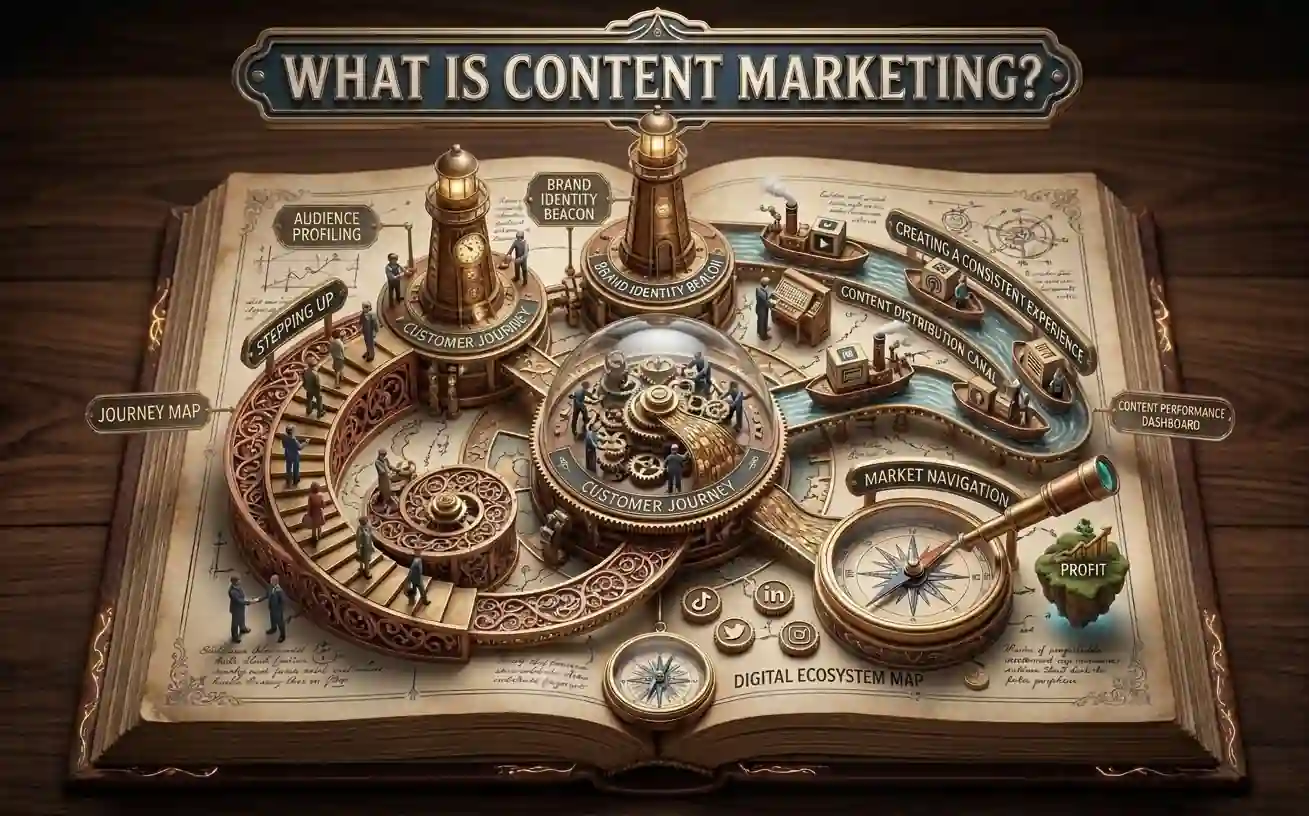
What Is Content Marketing?

Digital Marketing · Content Strategy

What Is Content Marketing?

A simple guide to understanding content marketing, its benefits, the different content formats and how to build a strategy that gives your marketing activities direction.

Beginner-friendly guide  ·  9–11 min read

Key idea

Content is not just something to publish. A clear content strategy gives SEO, social media, email and other marketing channels a shared direction.

Every business needs to communicate with its audience. Whether it wants to introduce a product, explain a service, answer customer questions or build brand awareness, it needs useful information to get its message across. This is where content marketing comes in.

Content marketing is a marketing approach that involves creating and sharing valuable, relevant content to attract and engage a target audience. Instead of focusing only on selling products or services, it provides information that helps people learn something, solve a problem or make better decisions.

For example, a company selling skincare products might publish articles about skincare ingredients, create videos explaining different skincare routines and share helpful tips on social media. These resources give potential customers useful information while introducing them to the company's products.

However, successful content marketing involves more than regularly publishing articles or social media posts. It requires a clear strategy that determines what a business should communicate, who it wants to reach and how its content should support its wider marketing goals.

In this guide, you will learn what content marketing is, how it works, its main types and benefits, and how to develop a content marketing strategy.

What Is Content Marketing?

Content marketing is the process of planning, creating, publishing and distributing useful content to attract, engage and retain a target audience.

The content can take different forms, including:

  • Blog posts and articles
  • Videos and tutorials
  • Social media posts
  • Infographics
  • Email newsletters
  • Podcasts
  • Ebooks and downloadable guides

The main idea is to provide information that people genuinely find useful rather than constantly promoting products or services.

For example, an accounting firm could publish articles explaining tax rules, budgeting methods and common financial mistakes. People searching for this information might discover the company's website, learn from its resources and eventually consider using its services.

Content marketing therefore helps businesses build relationships with potential customers before, during and after a purchase.

How Does Content Marketing Work?

Content marketing works by connecting a business with people who are interested in its products, services or areas of expertise.

It usually follows a simple process:

  1. Understand the audience: Identify the people the business wants to reach and the information they are looking for.
  2. Plan the content: Decide which subjects to cover, what the content should achieve and which formats are suitable.
  3. Create useful resources: Develop articles, videos, guides and other materials that address the audience's needs.
  4. Publish and distribute: Make the content available through the website, search engines, social media, email and other relevant channels.
  5. Measure performance: Review website traffic, engagement, enquiries and other relevant results.
  6. Improve the content: Use the findings to update existing resources and plan future content.

For example, someone considering buying a laptop might first read an article comparing different laptop specifications. They might then watch a product review, visit a retailer's website and eventually make a purchase. Each piece of content can help the person understand their options and move closer to making a decision.

What Is the Difference Between Content, Content Strategy and Content Marketing?

These three terms are closely related, but they do not mean exactly the same thing.

TermMeaning
ContentThe actual information or material being created, such as an article, video or infographic.
Content strategyThe broader approach to planning, organising, creating and managing content.
Content marketingUsing valuable content to attract, engage and retain an audience while supporting business objectives.

A content strategy establishes the direction for creating and managing content. Content marketing focuses on using that content to build relationships with an audience and achieve marketing goals.

For example, a travel company might decide to focus on helping people plan affordable holidays. Its content strategy could establish the main topics, audience needs, brand messaging and content formats. Its content marketing activities could then include publishing travel guides, sharing destination videos and sending email newsletters.

The distinction is useful because publishing content without a clear purpose can lead to disconnected marketing activities.

Why Is Content Strategy Important?

A content strategy provides direction for content marketing. It helps a business decide what information to communicate, who needs that information and how different content resources should work together.

Without a clear strategy, businesses may publish unrelated blog posts, share inconsistent social media updates or create content that does not address their customers' needs. A structured approach helps different marketing activities support the same objectives.

For example, a business selling fitness equipment might identify that its audience needs information about home workouts, exercise equipment and fitness routines. Based on this, it could create a collection of related resources:

  • Blog articles explaining different exercises.
  • Videos demonstrating how to use fitness equipment.
  • Product comparison guides.
  • Social media posts sharing workout tips.
  • Email newsletters featuring new articles and useful advice.

These resources can then support different digital marketing channels:

  • SEO: Helps people discover relevant content through search engines.
  • Social media marketing: Shares content and encourages interaction.
  • Email marketing: Delivers useful information directly to subscribers.
  • Paid advertising: Promotes selected content to reach a wider audience.
  • Website design: Organises information and makes it easier for visitors to navigate.

The bigger picture

A content strategy gives marketing activities a shared direction. SEO, social media, email and paid advertising help distribute and amplify the content rather than operating as disconnected activities.

This is why content should not be treated as an isolated marketing activity. A clear content strategy helps connect different channels and gives them a consistent direction.

What Are the Main Types of Content Marketing?

Businesses can use different content formats depending on their objectives, audience and available resources. Here are some of the most common types.

  • 01 · WrittenBlog Posts and ArticlesArticles explain subjects in detail, answer common questions and share useful information. They can also support SEO by targeting relevant search queries.
  • 02 · VideoVideo MarketingVideos can demonstrate products, provide tutorials, introduce services and explain complex topics. They can be shared on YouTube and social platforms.
  • 03 · SocialSocial Media ContentPosts, images, short videos and stories help businesses share information, promote resources and communicate with their audiences.
  • 04 · VisualInfographicsInfographics use charts, illustrations and short explanations to make information easier to understand and remember.
  • 05 · EmailEmail NewslettersNewsletters deliver articles, useful advice, industry updates and announcements directly to people who have subscribed.
  • 06 · AudioPodcastsPodcasts use discussions, interviews and educational episodes to share knowledge with people who prefer listening to content.

What Are the Benefits of Content Marketing?

A well-planned content marketing approach can support several business objectives.

1. Increases Brand Awareness

Publishing useful content helps people discover a business and become familiar with its products, services and expertise. For example, someone searching for advice about website security might discover an article published by a cybersecurity company. Even if they are not ready to purchase a service, they become aware of the business.

2. Builds Trust and Credibility

People are more likely to consider businesses that provide useful and reliable information. Articles, tutorials, guides and videos can demonstrate a company's knowledge and help establish it as a credible source within its industry.

3. Supports SEO and Organic Traffic

Search engines help people discover information online. Businesses that publish useful, relevant and well-organised content can create more opportunities to appear in relevant search results.

Content also provides opportunities to target search queries, connect related pages through internal links and attract organic visitors. However, content should be created primarily to help people rather than simply to include keywords. Google's guidance on creating helpful, reliable and people-first content explains this approach.

4. Generates Leads

Content can encourage potential customers to take further action. For example, a business might offer a free guide in exchange for an email subscription. A visitor who downloads the guide becomes a potential lead that the business can communicate with in the future.

5. Supports Customer Relationships

Content marketing is not limited to attracting new customers. Businesses can also use articles, newsletters, tutorials and product guides to help existing customers understand and use their products or services.

6. Supports Other Marketing Activities

Content provides the information and messages used across many marketing channels. SEO, social media, email marketing and paid advertising all rely on content to communicate with audiences. A consistent strategy helps these activities work together rather than operate independently.

How to Create a Content Marketing Strategy

A content marketing strategy does not have to be complicated. Businesses can start with a few important steps and develop their approach as they learn more about their audience.

  1. Understand Your Business Objectives
    Start by identifying what the business wants to achieve. Common objectives include increasing brand awareness, attracting website visitors, generating potential customers, improving engagement and supporting sales.
  2. Identify Your Target Audience
    Understand the people the business wants to reach. Consider their interests, questions, challenges and reasons for looking for particular products or services. This helps create content that addresses genuine needs.
  3. Research Topics and Content Opportunities
    Identify subjects that are relevant to the business and useful to its audience. Keyword research, customer enquiries, competitor websites, online discussions and existing website performance can all provide ideas.
  4. Choose the Right Content Formats
    Decide how each subject should be presented. Some topics are better suited to detailed articles, while others might be easier to explain through videos, diagrams or downloadable guides.
  5. Select the Right Marketing Channels
    Choose where your content should be published and distributed. A website can host detailed articles, social media can encourage discussion, email can maintain contact with subscribers and YouTube can host demonstrations.
  6. Create a Content Calendar
    Organise content topics, titles, publication dates, formats, responsibilities, distribution channels and content status. This makes production easier to manage.
  7. Measure and Improve Performance
    Review your content regularly to understand whether it is achieving its objectives. Identify which topics attract visitors, generate engagement and contribute to enquiries or sales.

Quick content strategy checklist

Use this checklist to review the essentials before creating content. Tick each item as you confirm it.

0 of 7 checked

How Do You Measure Content Marketing Performance?

Content marketing performance should be measured against the objectives established at the beginning of the strategy. Different metrics can help businesses understand how their content is performing.

MetricWhat It Measures
Website trafficThe number of visitors accessing website content.
Organic trafficVisitors arriving through unpaid search engine results.
Search impressionsHow often website pages appear in search results.
EngagementHow people interact with content, including comments and shares.
Email subscriptionsThe number of people signing up to receive email updates.
Conversion rateThe percentage of visitors who complete a desired action.
Leads generatedThe number of potential customers acquired through content.
SalesPurchases influenced or generated by marketing activities.

Businesses can use tools such as Google Analytics to understand website engagement and Google Search Console to monitor search performance.

The most important point is to select metrics that relate to the original objectives. For example, a business focused on increasing organic visibility should pay attention to search impressions, clicks and organic traffic. A business using downloadable guides to generate leads should monitor downloads and completed enquiries.

Frequently Asked Questions About Content Marketing

No. Content marketing is one part of digital marketing. Digital marketing includes several activities, such as SEO, social media marketing, email marketing and paid advertising. Content supports many of these activities by providing information that businesses can share with their audiences.

The main purpose of content marketing is to attract, engage and retain an audience by providing useful and relevant information. It also helps businesses build trust, increase brand awareness and support their marketing objectives.

They are related, but they are not identical. Content strategy covers the broader planning and management of content, while content marketing strategy focuses on using content to attract and engage an audience and achieve marketing goals.

SEO and content marketing are closely connected, but they are separate disciplines. Content marketing focuses on creating and distributing useful information, while SEO helps improve the visibility of that content in search engine results.

There is no fixed publishing schedule that works for every business. The frequency depends on the audience, objectives, available resources and type of content. Publishing useful content consistently is generally more valuable than producing large amounts of content without a clear purpose.

Yes. Small businesses can use content marketing to share their knowledge, answer customer questions and introduce their products or services to potential customers. They can start with simple formats, such as blog posts and social media updates, and expand as their resources allow.

Conclusion

Content marketing helps businesses communicate with their audiences through useful and relevant information. It can increase brand awareness, build trust, support SEO, generate leads and strengthen customer relationships.

However, successful content marketing requires more than publishing regular articles, videos or social media posts. Businesses need a clear content strategy that connects their objectives with audience needs and provides direction for their marketing activities. SEO, social media, email marketing and paid advertising can then support this strategy by helping the right people discover and engage with the content.

The key is to create content with a clear purpose. When businesses understand what they want to communicate, who they want to reach and how their content supports their objectives, their marketing activities become more organised, consistent and effective.

Further Reading

The following resources provide additional guidance on content marketing, content strategy and search optimisation:

External resources are provided for further reading. Their content and availability are controlled by their respective publishers.

Tagged in

Categories

Written by

Keshera Wijeyesekera

I write Interesting to Read, a blog on all kinds of topics worth your time. Outside of the blog, I work in SEO and digital marketing.

More about me  ·  LinkedIn  ·  Get in touch

Share with